How I Navigate Market Shifts for Smarter Returns — A Real Investor’s Take
Investing isn’t about chasing trends—it’s about staying steady when markets wobble. I’ve learned this the hard way, after jumping into hot sectors too fast and getting burned. Now, I focus on return planning that adapts to real market movements, not hype. This is how I balance growth and protection, using practical steps anyone can follow. No magic formulas—just experience-tested moves that keep my portfolio resilient. Over the years, I’ve come to understand that lasting financial progress isn’t about catching every upswing, but about avoiding catastrophic losses and compounding steady gains. What once felt like navigating a storm without a compass has become a disciplined journey guided by structure, awareness, and patience.
The Wake-Up Call: Why Return Planning Needs a Reality Check
Many investors assume that diversification alone is enough to protect their returns, but I discovered the hard truth during a sharp market correction several years ago. I had built what I thought was a well-balanced portfolio—mixing stocks, bonds, and a few ETFs across sectors. When the downturn hit, nearly everything dropped in value at once. My so-called safety net had vanished, and I watched months of progress disappear in a matter of weeks. That moment was a wake-up call: I had been planning for growth, but not for volatility. I realized that return planning isn’t just about selecting the right assets—it’s about designing a strategy that can endure stress, uncertainty, and emotional pressure.
From that point on, I began to redefine what “return” meant to me. Instead of focusing solely on peak performance, I started measuring success by consistency and sustainability. I studied historical market cycles, not to predict the future, but to understand patterns of behavior—how fear spreads, how bubbles form, and how recoveries unfold. This knowledge didn’t make me immune to losses, but it gave me a framework for anticipating risk. I began asking different questions: How much drawdown can I tolerate? What triggers a sector-wide sell-off? How do external factors like inflation or interest rates influence long-term trends? These aren’t theoretical concerns—they’re practical considerations that shape how I allocate capital today.
The most important shift was psychological. I stopped viewing market dips as failures and started seeing them as part of the process. A realistic return plan accepts that losses are inevitable. The goal isn’t to avoid them entirely, but to manage their impact. I now build in buffers—cash reserves, defensive assets, and predefined exit points—so that when turbulence hits, I’m not scrambling to react. This proactive approach has transformed my relationship with investing. Instead of feeling at the mercy of the market, I feel prepared. That sense of control is worth more than any short-term gain.
Reading the Market: Spotting Trends Without the Hype
One of the biggest challenges in investing is cutting through the noise. Every day brings a flood of headlines, analyst opinions, and social media chatter—most of it designed to provoke emotion rather than inform decisions. I used to read financial news obsessively, reacting to every earnings report or economic data release. Over time, I realized that this constant monitoring wasn’t helping me make better choices—it was clouding my judgment. The real signals were buried beneath the hype. I needed a way to distinguish between temporary fluctuations and meaningful shifts.
My solution was to focus on long-term indicators rather than daily price movements. For example, I began tracking sector rotation patterns—when capital moves from growth-oriented industries like technology to more stable sectors like utilities or consumer staples. These shifts often reflect deeper economic trends, such as rising interest rates or slowing consumer spending, rather than just investor sentiment. By paying attention to these macro-level movements, I could position my portfolio ahead of broader market turns. I didn’t need to predict the exact timing—just understand the direction and adjust accordingly.
I also started analyzing corporate earnings trends across multiple quarters, not just single reports. A one-time miss might be noise, but a consistent decline in revenue or profit margins could signal structural issues. Similarly, I looked at consumer behavior data—retail sales, credit card spending, and housing activity—as leading indicators of economic health. These metrics don’t change overnight, but they provide a clearer picture of where the economy is headed. When combined, they helped me filter out short-term distractions and focus on what truly matters: sustainable business performance and macroeconomic stability.
This method doesn’t guarantee perfect timing, but it reduces the risk of making impulsive decisions. Instead of reacting to a sudden market dip, I ask whether the fundamentals have changed. If not, I stay the course. If they have, I make measured adjustments. This disciplined approach has allowed me to avoid panic selling and take advantage of opportunities when others are fearful. Over time, I’ve learned that patience and observation are more valuable than speed.
Building a Return Strategy That Works in Any Market
After my early setbacks, I knew I needed a more structured approach—one that could deliver results regardless of market conditions. I adopted what’s known as the core-satellite strategy, which divides the portfolio into two parts: a stable core of long-term, low-volatility investments and a smaller satellite portion dedicated to tactical, higher-growth opportunities. The core typically makes up 70–80% of my holdings and includes broad-market index funds, dividend-paying stocks, and high-quality bonds. These assets provide stability and steady compounding over time.
The satellite portion, on the other hand, allows me to take controlled risks. I allocate 20–30% to targeted investments in emerging sectors, thematic ETFs, or individual companies with strong growth potential. These aren’t speculative bets—they’re based on research and aligned with long-term trends like renewable energy, digital infrastructure, or healthcare innovation. Because this portion is limited in size, even if one investment underperforms, it won’t derail the entire portfolio. This balance between safety and opportunity has been key to achieving consistent returns without excessive risk.
Another critical element of my strategy is having clear rules for entry and exit. For every investment, I define in advance what would make me sell—whether it’s a price target, a fundamental change in the company, or a shift in market conditions. This removes emotion from the decision-making process. I also set time horizons for each holding, so I don’t hold onto underperformers out of hope. These rules aren’t rigid—they can be adjusted as new information emerges—but they provide a framework that keeps me disciplined.
Flexibility is built into the system from the start. I don’t expect every investment to succeed, but I do expect the overall strategy to adapt. When market conditions change—such as rising inflation or slowing growth—I rebalance the portfolio to reflect the new reality. This might mean reducing exposure to cyclical stocks or increasing allocations to inflation-resistant assets like Treasury Inflation-Protected Securities (TIPS) or real estate investment trusts. By aligning my strategy with actual market dynamics, I avoid the trap of clinging to outdated assumptions.
Risk Control: The Hidden Engine of Sustainable Gains
Most financial advice emphasizes growth, but I’ve come to believe that risk management is the true foundation of long-term success. Without it, even the most promising portfolio can unravel quickly. My approach centers on three key principles: position sizing, correlation awareness, and regular rebalancing. These may sound technical, but they’re simple in practice and powerful in effect.
Position sizing means limiting how much I invest in any single asset. I never allocate more than 5% of my portfolio to one stock or sector-specific ETF. This ensures that if an investment fails, the damage is contained. I learned this lesson the hard way when I once put too much into a single tech stock that later collapsed. Now, I treat every investment as a calculated risk, not a bet on a winner. This discipline protects my capital and allows me to stay in the game over the long term.
Correlation is another often-overlooked factor. Diversification only works if your assets don’t move in lockstep. During the 2008 financial crisis, many investors discovered that their supposedly diversified portfolios dropped together because everything was tied to the same economic risks. To avoid this, I seek out assets with low or negative correlation—such as commodities, certain real estate funds, or international bonds. These don’t always rise when stocks fall, but they tend to behave differently under stress, which helps smooth out volatility.
Rebalancing is the final piece of the puzzle. I review my portfolio every quarter to ensure it still aligns with my target allocations. If one asset class has grown too large due to strong performance, I sell a portion and reinvest in underweight areas. This forces me to “sell high and buy low,” which is easier said than done without a system. Rebalancing also keeps my risk level consistent—if equities have surged, my portfolio becomes riskier even if I’ve done nothing. By resetting periodically, I maintain control over my exposure.
Together, these practices form a quiet but powerful engine of sustainability. They don’t generate headlines or viral tweets, but they protect wealth and enable steady compounding. Over time, I’ve found that avoiding large losses is more important than chasing high returns. A 20% loss requires a 25% gain just to break even—so preserving capital is the first step toward growth.
Practical Moves: What I Do Differently Now
In my early years, I treated investing as a set-it-and-forget-it activity. I picked a few funds, contributed regularly, and hoped for the best. That passive approach worked during bull markets, but failed me when conditions turned. Now, I take a more active role—not in the sense of day trading or constant buying and selling, but in staying alert to changes and adjusting my strategy accordingly.
For example, when market volatility spikes—as measured by indicators like the VIX—I automatically reduce my exposure to aggressive growth stocks and increase my cash position. This isn’t a prediction of a crash, but a recognition that uncertainty has risen. Holding more cash gives me dry powder to deploy when prices drop. I also use dollar-cost averaging more strategically. Instead of investing the same amount every month regardless of price, I increase contributions during market pullbacks. This turns periods of fear into buying opportunities, allowing me to acquire more shares at lower prices.
Another change is how I plan for downside risk. I now create scenario plans: What if the market drops 10%? 20%? 30%? For each level, I outline how I would respond—whether it’s holding steady, rebalancing, or selectively adding to positions. Having these plans in writing removes emotion from the equation. When a correction happens, I don’t panic—I follow the playbook. This preparation has given me confidence during turbulent times.
I also pay closer attention to valuation. I don’t try to time the market, but I do avoid buying assets when they’re significantly overvalued. I use basic metrics like price-to-earnings ratios, dividend yields, and long-term average valuations to assess whether an investment is fairly priced. If everything looks expensive, I’m comfortable holding more cash until better opportunities emerge. This patience has saved me from entering markets at peaks and suffering steep drawdowns.
Tools That Help—Without Overcomplicating Things
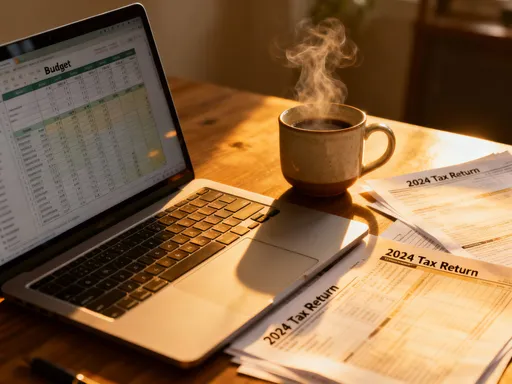
I don’t believe in complex algorithms or high-tech trading platforms. In fact, I’ve found that simplicity leads to better outcomes. My toolkit is intentionally basic: a spreadsheet to track performance, a calendar for scheduling reviews, and free data from reputable financial websites. These tools keep me organized without overwhelming me with noise.
The spreadsheet is my central hub. It logs every investment, its cost basis, current value, and allocation percentage. I update it quarterly, which forces me to review each holding and assess its role in the portfolio. I also track dividend income and capital gains, which helps me understand my total return. This hands-on approach keeps me engaged and informed. I don’t rely on brokerage summaries alone—they often group assets in ways that obscure true diversification.
The calendar is just as important. I schedule quarterly portfolio reviews, tax planning sessions, and rebalancing dates in advance. This prevents procrastination and ensures consistency. I also mark economic data release dates—like CPI reports or Fed meetings—so I can anticipate potential market moves without reacting impulsively. These small habits create structure and reduce decision fatigue.
I avoid tools that promise outsized returns with minimal effort. Algorithmic trading, leveraged ETFs, and options strategies may work for professionals, but they add layers of complexity and risk that aren’t worth it for long-term investors. I’ve seen friends lose money chasing high-tech solutions that failed during market stress. My philosophy is that technology should support my strategy, not drive it. Clarity, consistency, and control matter more than speed or sophistication.
Staying the Course: The Mindset That Makes the Difference
Even the best strategy fails without the right mindset. I’ve learned that emotional discipline is the most important skill in investing. Markets will test your patience—earnings disappointments, geopolitical tensions, and unexpected shocks are inevitable. Reacting emotionally—selling in fear or buying in greed—only amplifies losses. Over time, I’ve developed habits to stay grounded.
One of the most helpful is keeping an investment journal. After every major decision, I write down my reasoning, the expected outcome, and how I felt at the time. Later, I review these entries to see what worked and what didn’t. This reflection has helped me identify patterns in my behavior—like overconfidence after a winning streak or hesitation after a loss. Awareness is the first step toward improvement.
I also remind myself that investing is a long-term endeavor. Short-term results are noisy and often misleading. What matters is the trajectory over years, not weeks. I measure progress annually, not daily. This long view helps me stay focused on my goals rather than market noise. I don’t celebrate every uptick or mourn every dip—I trust the process.
Patience has delivered better results than any single winning trade. By sticking to my plan, rebalancing regularly, and avoiding impulsive moves, I’ve achieved steady growth with less stress. The real payoff isn’t just financial—it’s peace of mind. Knowing I have a strategy that can adapt to changing conditions gives me confidence, even when the market is volatile.
Investing success isn’t measured by peak returns, but by how well you protect and grow wealth over time. My journey taught me that return planning must evolve with market trends, not fight them. By focusing on practical steps, controlling risk, and staying grounded, I’ve built a strategy that works—not perfectly, but consistently. You don’t need insider knowledge or complex tools. You need clarity, discipline, and the courage to stay the course. That’s how real returns are earned.